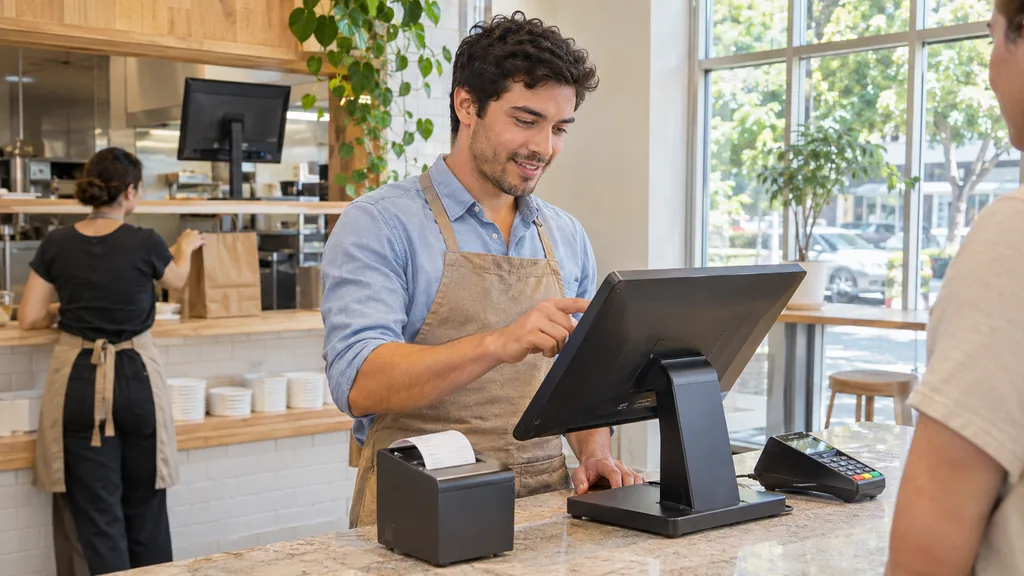
Church's Chicken's 2026 franchise disclosure document sets rules for the systems inside a restaurant and for the suppliers allowed to serve it. The document makes the core point plain: a franchisee must use the POS system and related software from suppliers Church's Chicken designates and approves. A software or service company should read that as a headquarters route, not a store-by-store opening. This guide reads the current franchise disclosure document as a sales signal, not as franchise-buying advice.
What the 2026 filing says
| Filing signal | What it means for your route to market |
|---|---|
| POS system | Franchisees must use a POS system, related software, back-office computers and card-processing services from designated and approved suppliers. |
| Order ahead | Franchisees must participate in the order-ahead program, which the filing says operates through Olo and the Church's digital app. |
| POS data | Church's Chicken reserves the right to retrieve information from the restaurant's computer and POS system, including sales and menu-mix data. |
| Supplier approval | A non-approved supplier can make a written request, subject to Church's Chicken's review, testing and continuing standards. |
| Supplier changes | The brand says the identity of approved suppliers may change at its sole discretion. |
These signals do different jobs. A required system tells you where the decision sits. A supplier approval process tells you a route exists, not that the category is open. Reading Item 8 supplier terms with Item 11 technology terms keeps those two conclusions separate.
POS and data are headquarters decisions
Item 8 requires each restaurant to obtain, install and use a POS system. The filing defines that system broadly: point-of-sale equipment, software, back-office computer systems, and credit-card processing equipment and services. It then says the franchisee must buy and use the then-approved system and related software only from approved suppliers.
That is a practical boundary for a POS, payments, back-office or data product. The product may be used locally, but the system standard and data access are controlled above the restaurant. A replacement sale needs a corporate case. An adjacent product still needs to show how it fits beside the required stack. The technology-stack reading method helps separate those paths before a team builds an account list.
The order-ahead program names Olo
The filing also requires franchisees to participate in an order-ahead, pay-ahead program. It says the program uses integrated ordering enterprise software from Olo and the Church's digital app, allowing customers to order through churchs.com and choose a later pickup time. Franchisees may incur fees paid to Olo and other designated or approved vendors.
The requirement is specific enough to shape a sales conversation, but it does not settle every ordering, delivery or guest-data category. Do not turn a named platform into a claim that every adjacent product is blocked. The useful question is narrower: does your product replace, integrate with or sit outside the required program? That is the same distinction in the Arthur Murray POS example.
Supplier approval is a route, not a guarantee
Church's Chicken says a franchisee, supplier or distributor seeking to use a non-approved source must make a written request. The brand may require inspection of the supplier's facilities, product samples and independent laboratory testing. The filing says the review can range from 30 days for simple items to 18 months for complex food formulas. It also says the brand may periodically reinspect an approved supplier and revoke approval if standards are no longer met.
That is a procurement path with a real cost of entry. It is not a reason to send a generic local-sales sequence. Before you call the approval process a pipeline stage, establish what category your product sits in, what proof the brand will need, and whether the system owner has a reason to add it. Selling into franchise systems starts with that work.
Purchasing control is broad
The filing estimates that approved suppliers, designated suppliers and suppliers that meet the brand's standards account for about 99% of the products and services needed to establish and operate a restaurant. It also says a franchisee must participate in the Church's Holding Supply Chain Department or a successor the brand designates. Those terms make category definition important before a supplier targets individual restaurants.
How to build the account plan
- Classify the product. Decide whether it replaces a required system, depends on one, or operates beside it.
- Read Items 8 and 11 together. One defines sourcing and supplier control. The other shows the operating, data and technology obligations.
- Build the headquarters case first. Required POS, order-ahead and data access terms point to a brand-level decision path.
- Use the supplier route when it fits. Be ready for a written request, standards review and possible inspection or testing before you treat approval as likely.
The broader lesson applies across franchise brands. A filing can show who controls a category, whether the brand names a system, and whether a supplier path exists. Read the FDD guide for B2B sales teams for the method, then use the franchise directory to research a specific target.